
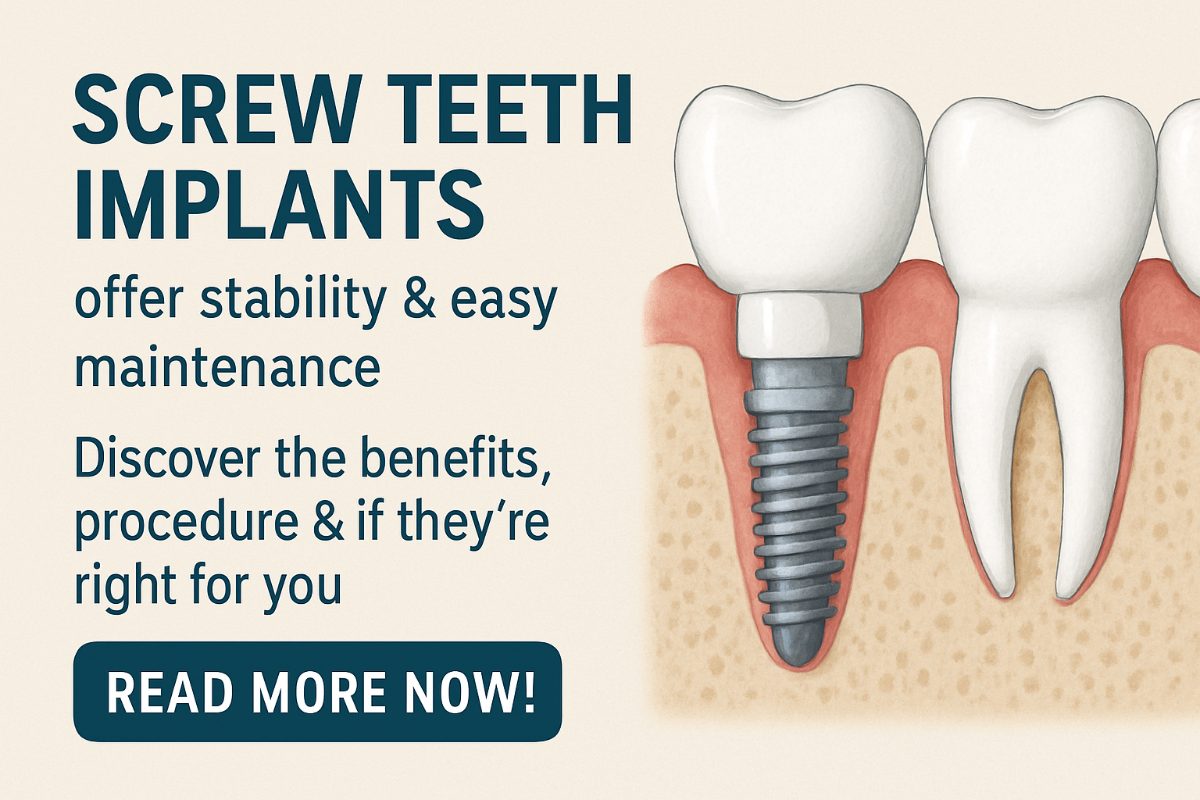
Screw teeth implants are a style of dental restoration where the final crown or bridge is attached to the implant with a screw rather than cement. This article is for people who are exploring options for replacing missing teeth and want clear facts about pros, cons, procedure, cost, and when to see a dentist. You will learn how screw teeth implants work, who qualifies, recovery basics, and practical next steps — including options for tooth implants in Jacksonville, FL.
What are screw teeth implants?
Screw-retained implant restorations are prosthetics attached to an implant abutment by a small screw. The implant fixture (a titanium post) is placed in the jawbone, an abutment connects to the fixture, and a crown or bridge is secured with a screw through the prosthetic into the abutment. Compared with cement-retained restorations, screw-retained designs avoid cement around the gumline and are often easier to remove. Screw teeth implants differ from removable options like dentures because they offer fixed stability similar to natural teeth.
The term tooth implants covers the implant fixture and the prosthetic, whether the restoration is screw-retained or cement-retained.
How screw teeth implants work
The process starts with placing an implant fixture into the jawbone. After healing and osseointegration (the bone bonding to the implant), an abutment is connected. The final crown or bridge has a small access hole; a screw passes through that hole to lock the prosthetic to the abutment.
A screw connection matters because it makes the restoration retrievable for maintenance or repair. If a crown chips, or if the abutment needs adjustment, the dentist can remove the screw-retained prosthetic without cutting or scraping cement away from the implant — reducing the risk of damaging tissue or leaving cement that can cause inflammation.
Who is a good candidate for screw teeth implants?
- Healthy gums and controlled oral inflammation
- Adequate jawbone volume or willingness to undergo grafting if needed
- Good overall health and healing ability
- Non-smokers or people willing to quit during healing
- Realistic expectations about timeline and maintenance
Certain medical conditions (uncontrolled diabetes, heavy smoking, or immune compromise) or severe bone loss require extra planning. Your dentist may recommend bone grafting, sinus lift, or working with a surgeon for complex cases.
Benefits of screw teeth implants
Retrievability and maintenance
Screw-retained restorations can be removed without damaging the prosthetic or surrounding tissues. That makes repairs, adjustments, and hygiene checks easier and safer over time.
Lower risk of cement-related inflammation
Because no cement is used at the gumline, there is less chance of excess material being trapped under the gum and causing peri-implant inflammation.
Longevity and stability
Screw teeth implants offer strong chewing function and long-term stability compared with removable dentures. Properly placed and maintained tooth implants can support normal eating and speech for many years.
Risks and drawbacks of screw teeth implants
Screw loosening and mechanical issues
Screws can occasionally loosen or fracture. Routine follow-up visits help catch and fix mechanical issues early. Repairs are usually straightforward but require dental attention.
Aesthetic considerations
On front teeth the screw access hole can affect aesthetics. Dentists use angled abutments, small polished coverings, or tooth-colored composite to mask access while preserving retrievability.
Surgical and healing risks
Like any surgery, implant placement carries risks of infection, swelling, and bleeding. If bone is insufficient, grafting adds complexity and healing time.
The treatment process: step-by-step
Consultation and imaging
Your dentist will examine your mouth, take digital imaging or an intraoral scan, and create a personalized treatment plan. This plan identifies implant positions, need for grafting, and final restoration type.
Surgery and healing
Implant fixtures are placed in a minor surgical visit. Temporary crowns or prosthetics may be used while the implant integrates with bone over several weeks to months (osseointegration).
Final restoration
Once healed, the abutment and screw-retained crown or bridge are placed. The dentist checks bite alignment (occlusion) and teaches you care and maintenance steps.
Recovery and aftercare
Initial healing takes a few days to two weeks for soft tissue; full bone integration may take 3–6 months depending on the case. Use recommended pain control, soft foods at first, and avoid smoking. Good home care includes regular brushing, flossing, and use of any interdental tools your dentist recommends. Regular dental checkups and professional cleanings are critical to protect your tooth implants long-term.
Cost, insurance, and financing for tooth implants in Jacksonville, FL
Cost varies by complexity: number of implants, type of restoration, need for bone grafting, and materials. Single implant with a screw-retained crown generally costs more than a removable denture but less over time when durability is considered. Insurance often covers a portion of restorative costs but may have limits for implants. Ask your dental office about payment plans, third-party financing, and options like CareCredit to spread payments.
How screw teeth implants compare to other options
Vs removable dentures
Screw implants are more stable, preserve bone, and feel more like natural teeth. Dentures are lower upfront cost but require daily removal and can accelerate bone loss over time.
Vs fixed bridges or cement-retained implants
Screw-retained restorations are easier to retrieve for repairs and avoid cement-related inflammation. Cement-retained crowns may offer slightly better initial aesthetics in some situations, but they carry a higher risk of residual cement causing gum issues with long-term care for tooth implants.
Why choose West Dentistry for screw teeth implants
West Dentistry offers digital imaging and intraoral scanning, an on-site surgical suite, and an in-house oral surgeon (Dr. Victor Erminy) for implant placement. The integrated restorative team led by Dr. Jacqueline West coordinates surgery and prosthetic care in one location for streamlined treatment. The practice emphasizes patient comfort and personalized planning in a spa-like environment.
When to schedule a consultation for tooth implants in Jacksonville, FL
If you have missing teeth, loose restorations, or are curious about screw teeth implants, book an exam to learn your options. West Dentistry offers online scheduling and financing options to help you plan care. At your first visit expect a focused exam, digital imaging, a discussion of goals and medical history, and a clear treatment plan with costs and timelines.