Dental implants for false teeth are a permanent way to replace missing teeth by anchoring new teeth to the jawbone. People consider dental implants for false teeth because they want a stable, natural-feeling smile that lasts longer than removable dentures. This post explains what “false teeth” means, how implants work, who’s a good candidate, timelines, costs, and how to decide if dental implants for false teeth in Jacksonville are right for you.
What are “false teeth” and common replacement options
False teeth is a general term that covers removable dentures, removable partials, and fixed bridges. Removable dentures sit on the gums and can be taken out; partials replace several teeth and clip to remaining teeth; bridges use nearby teeth as anchors. Compared with dental implants for false teeth, removable dentures are less expensive but can slip and need adjustments. Bridges are stable but require altering healthy teeth. Implants offer the most natural function but need surgery and more healing time.
How dental implants work
Basic parts of an implant
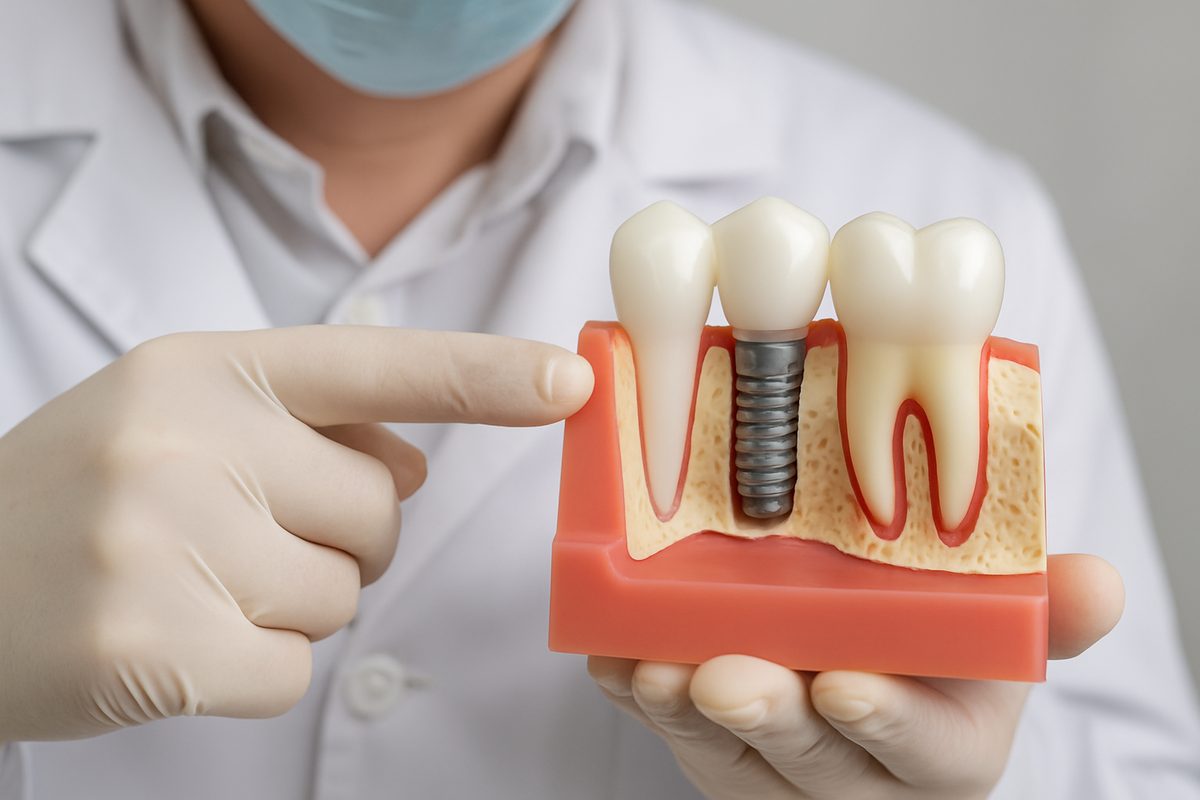
An implant system has three parts: the titanium fixture (the implant) that is placed into bone, the abutment that connects the implant to the visible tooth, and the crown, bridge, or denture that replaces the missing tooth or teeth.
Common implant-based solutions for false teeth
Options include a single implant and crown for one missing tooth, an implant-supported bridge for several teeth, implant-retained dentures that snap onto two or more implants, and full-arch solutions like All‑on‑4 for replacing a whole row of teeth. Each option balances cost, stability, and the number of surgeries needed.
Key benefits of dental implants for false teeth
Implants give strong stability for chewing and speaking and feel more like natural teeth. They preserve jawbone by stimulating bone like a natural tooth root, which helps maintain facial shape. Implants reduce sore spots from dentures, improve confidence, and often last decades with proper care, which can make them more cost-effective over the long term compared with repeatedly replacing dentures.
Who is a good candidate?
Good candidates are in generally good health, have controlled gum disease, and are willing to follow healing and hygiene instructions. Smoking, certain medications, and uncontrolled medical issues can affect success. Adequate jawbone is needed; if bone is low, grafting or sinus lifts may be required. Age alone isn’t a barrier—what matters is bone, health, and realistic expectations.
Treatment process and timeline
Treatment begins with an exam and digital imaging to plan. Sometimes teeth need extraction and bone grafts first. Implants are placed surgically, then the bone fuses to the implant (osseointegration), a process that usually takes 3–6 months. After healing, the final restoration (crown, bridge, or denture) is attached. Recovery includes short-term soreness and follow-up visits to check healing and fit.
Costs, insurance, and maintenance
Main cost drivers are the number of implants, any grafting, the type of final restoration, and lab work. Dental insurance may cover portions but often limits implant benefits; financing and payment plans are common. Daily care is like natural teeth: brush, floss, and regular dental checkups. Professional cleanings and exams help keep implants healthy and spot issues early.
Why choose a practice with on-site surgery and modern digital tech
On-site surgical care means fewer referrals and smoother coordination between surgeon and dentist. Digital imaging and intraoral scanning improve planning accuracy, shorten appointments, and make restorations fit better. West Dentistry offers on-site surgical care and digital workflows to simplify implant treatment and keep care coordinated for patients.
Next steps: Is dental implants for false teeth right for you?
Quick checklist: Do you want a stable, long-term solution? Are you generally healthy and willing to undergo minor surgery? Do you have—or can you get—enough bone? If you answered yes to most, schedule a consult to review options, financing, and a personalized plan. Call or book an exam to discuss dental implants for false teeth in Jacksonville and find the best path forward.