
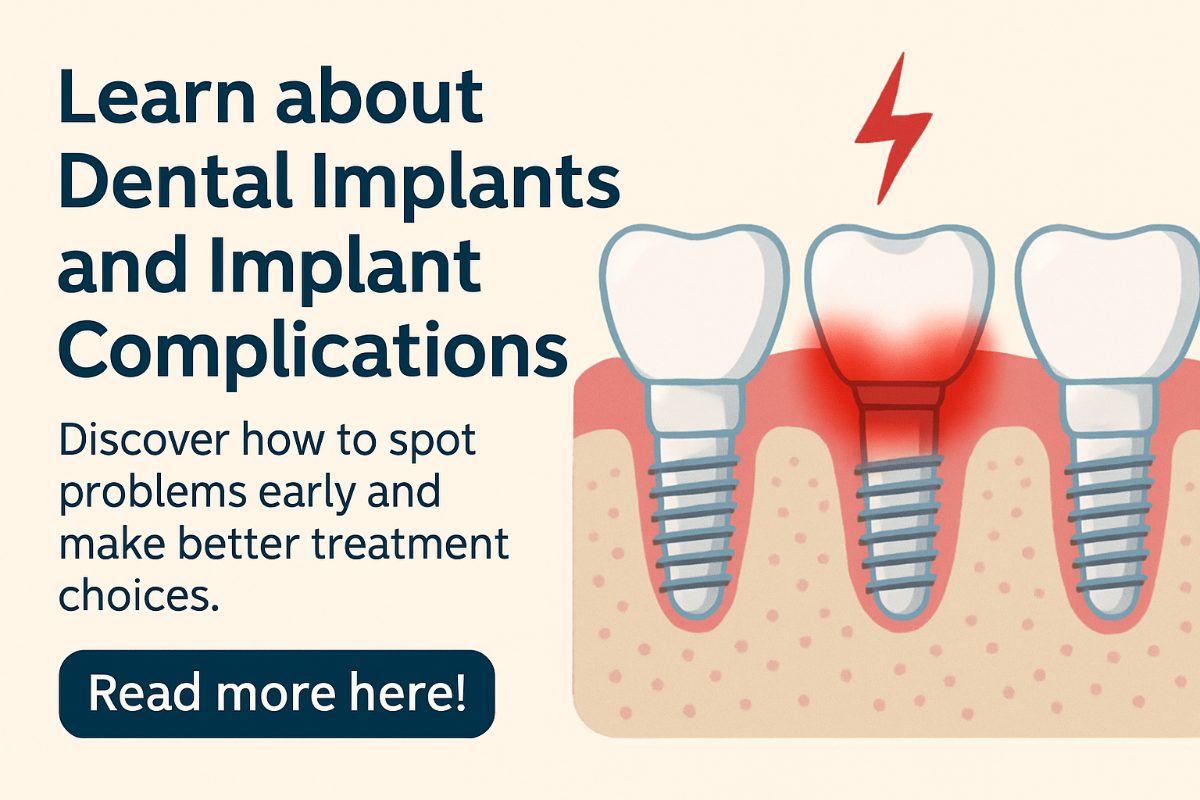
Knowing the most common complications of dental implants helps you spot problems early and make better treatment choices. This post explains how implants work, the usual implant complications to watch for, who’s at higher risk, how issues are diagnosed and treated, and practical steps to lower your chance of trouble. If you’re considering dental implants or already have them, this guide will help you take safer next steps.
How Dental Implants Work And Why Complications Happen
Dental implants are titanium posts placed into the jaw to replace missing tooth roots. After placement the bone grows around the implant in a process called osseointegration, creating a stable base for a crown, bridge, or denture. Typical steps include consultation and imaging, implant placement, a healing period, and final restoration.
Complications happen when biology or mechanics don’t follow the plan: poor healing, infection, not enough bone, pressure from a bad bite, or problems with the prosthetic parts. Many issues are preventable with good planning and follow-up care.
The Most Common Complications Of Dental Implants
Peri-Implantitis (Infection And Inflammation)
Peri-implantitis is infection and inflammation of the tissues around an implant. Causes include poor oral hygiene, untreated gum disease, and trapped bacteria. Signs to watch for are redness, swelling, bleeding when brushing, loosening of the implant, and a persistent bad taste or smell. Short-term it causes discomfort; long-term it can destroy bone and lead to implant loss if not treated.
Failed Osseointegration (Implant Doesn’t Fuse To Bone)
Failed osseointegration means the implant never properly bonds with the jaw. Early signs include persistent pain, mobility, or an implant that feels loose during the first weeks to months after placement. Common causes are poor bone quality, infection during healing, excessive movement, or smoking. Sometimes a second attempt with better planning or bone grafting is needed.
Nerve Injury And Altered Sensation
Nerve injury most commonly affects the lower jaw where the inferior alveolar nerve runs. Symptoms include numbness, tingling, or a “pins and needles” feeling in the lip, chin, or tongue. Many cases are temporary and improve with time or medication; more severe injuries may need surgical review or removal of the implant.
Sinus Problems With Upper Jaw Implants
Upper jaw implants near the sinus can irritate or penetrate the sinus cavity, causing sinusitis, nasal discharge, or a feeling of pressure. Proper imaging and sinus lifts when needed reduce the risk. If sinus issues occur, ENT or oral surgery care can often resolve them.
Prosthetic Complications (Loose Or Broken Crown, Screw Issues)
Prosthetic problems include loose crowns, fractured restorations, or stripped screws. These are often mechanical and can usually be repaired quickly—tightening a screw, replacing a crown, or remaking a prosthesis. Regular maintenance reduces these events.
Aesthetic Issues (Gum Recession, Visible Metal)
Gum recession around an implant can reveal metal components or create an uneven gum line. Causes include thin gum tissue, aggressive brushing, and chronic inflammation. Options to improve appearance include soft-tissue grafts, new prosthetic design, or reshaping restorations for a more natural look.
Common Risk Factors That Raise The Chance Of Implant Complications For dental implants in Jacksonville, FL
Certain factors raise the chance of implant complications for dental implants in Jacksonville, FL. Know these before treatment and address what you can.
- Smoking: Reduces blood flow and healing, raising failure and infection risk. Quit before treatment and avoid relapse during healing.
- Uncontrolled Diabetes: High blood sugar slows healing and increases infection risk. Improve control with your medical team before surgery.
- Poor Oral Hygiene: Plaque buildup leads to peri-implantitis. Commit to daily cleaning and professional cleanings after placement.
- Low Bone Volume: Thin or resorbed bone makes osseointegration harder. Bone grafting or different implant planning can help.
- Bruxism (Teeth Grinding): Excessive forces can loosen implants or break restorations. Night guards and bite adjustment reduce risk.
- Certain Medications: Some drugs (like bisphosphonates) affect bone healing. Tell your dentist all medications so risks can be managed.
Before starting care for dental implants in Jacksonville, FL, discuss these risks with your provider and make a plan to lower them.
How Implant Complications Are Diagnosed And Treated
Diagnosis: Exams And Imaging
Diagnosis begins with a clinical exam and patient history. Digital x-rays and CBCT scans show bone levels and implant position. Intraoral scanning documents soft tissue and prosthetics. These tools help find infection, bone loss, nerve proximity, and prosthetic issues.
Treatment Options
Treatment varies by problem:
- Non-surgical care: professional cleaning around the implant, improved home care, and antibiotics for infection.
- Surgical revision: cleaning infected bone, use of barrier membranes, and bone grafting to restore lost support.
- Implant removal and replacement: when an implant fails, removing and re-placing after healing may be needed.
- Prosthetic fixes: tightening screws, remaking crowns, or adjusting the bite for long-term stability.
When Emergency Care Is Needed
Seek same-day attention for severe swelling that affects breathing or swallowing, rapidly spreading infection, uncontrolled bleeding, or sudden numbness that doesn’t improve. Quick care can prevent serious outcomes.
How To Reduce Your Risk When Getting Dental Implants In Jacksonville, FL
Reduce risks for dental implants in Jacksonville, FL by following these steps:
- Complete a thorough evaluation with digital imaging and 3D planning to position implants safely.
- Stop smoking well before surgery and during healing.
- Control medical conditions like diabetes with your physician.
- Practice excellent oral hygiene and attend maintenance visits every 3–6 months as recommended.
- Use night guards if you grind your teeth and follow prosthetic care instructions.
Modern technology—CBCT scans, intraoral scanning, and in-house surgical suites—reduces surprises and shortens treatment time, lowering the chance of complications.
Considering Dental Implants In Jacksonville, FL? About West Dentistry And Next Steps
If you’re considering dental implants in Jacksonville, FL, West Dentistry offers a team approach that streamlines care. The practice uses digital planning and intraoral scanning and has an on-site surgical suite with an in-house oral surgeon to perform implant placement and related procedures in one location.
To get started, schedule a consultation and bring any medical records, a list of medications, and questions about smoking, diabetes, or medications. West Dentistry offers online scheduling and financing options to make care accessible.
If you’d like an evaluation for dental implants in Jacksonville, FL, request an appointment to review your case, imaging needs, and a personalized plan to reduce implant complications and protect your long-term oral health.