This page defines dental implants simply and explains the main kinds of dental implants, who each type suits, and how to choose the right one. If you’re weighing options, this guide will walk through the common dental implant types in Jacksonville, FL, explain materials and restorations, outline the treatment timeline, and offer practical next steps.
What is a dental implant?
A dental implant is a small post placed into the jaw to replace a missing tooth root. Implants have three main parts: the implant (the metal or ceramic post), the abutment (connects the post to the visible tooth), and the crown or prosthesis (the replacement tooth or teeth). By replacing the root, implants restore chewing, speech, and the look of your smile while helping preserve jawbone over time.
Common dental implant types in Jacksonville, FL
Endosteal (root-form) implants
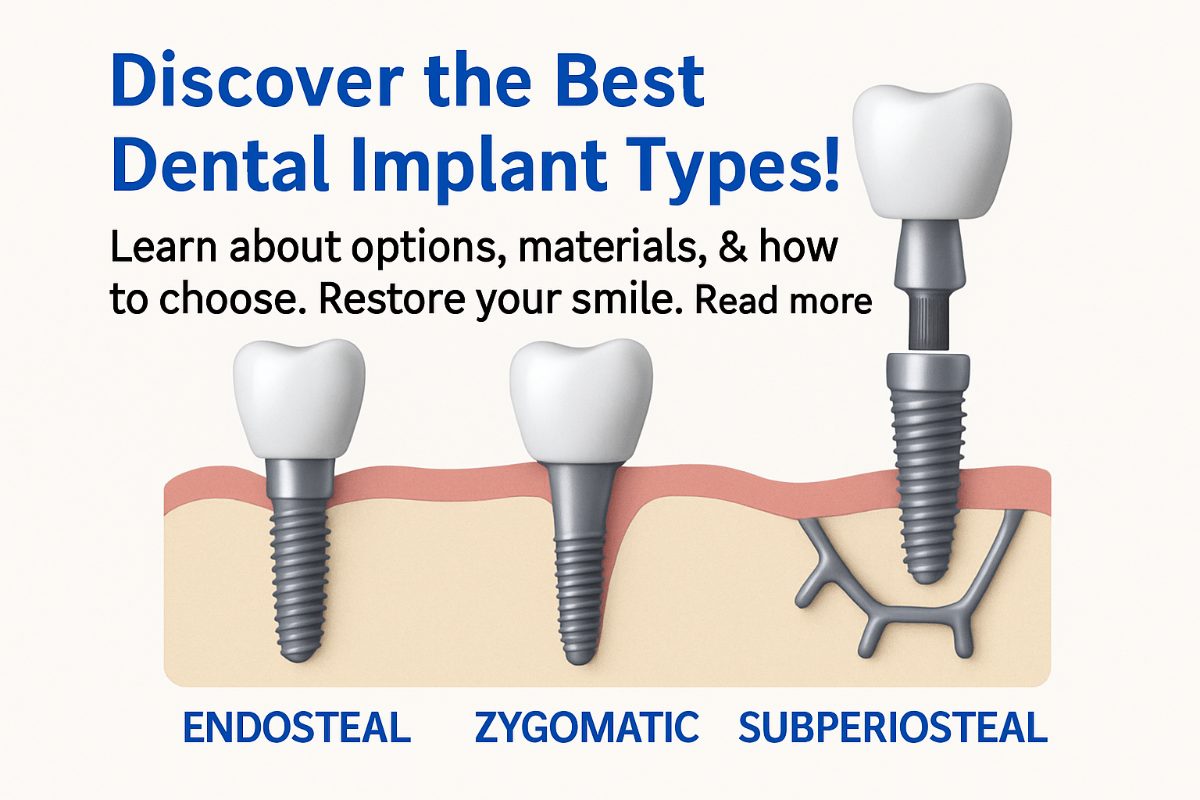
Endosteal implants are the most common. These screw-shaped posts are typically titanium or zirconia and are placed into the jawbone. They work well for single-tooth replacements or several adjacent teeth when there is enough healthy bone.
Subperiosteal implants
Subperiosteal implants use a metal framework that sits on top of the jawbone but under the gum. They’re an option when jawbone height is low and the patient prefers to avoid bone grafting.
Zygomatic implants
Zygomatic implants are much longer and anchor in the cheekbone (zygoma). They are used for severe upper-jaw bone loss when standard implants aren’t possible, often avoiding extensive grafting.
All‑on‑4 and full‑arch implant solutions
All‑on‑4 and similar full‑arch systems use four or more implants to support a fixed bridge for a whole arch of teeth. They provide a faster, more stable alternative to traditional dentures and can often be loaded the same day or soon after placement.
Mini dental implants
Mini implants are narrower in diameter. They’re commonly used to stabilize dentures or in tight spaces where standard implants won’t fit. They have limits for long-term single-tooth replacements but can be a cost-effective solution for denture retention.
Materials and restorative options
Titanium is the most widely used implant material because of its proven strength and bone-friendly properties. Zirconia is a metal-free ceramic option, chosen for esthetics or metal sensitivities. Common restorations include:
- Single crowns — replace one tooth
- Implant bridges — replace multiple adjacent teeth
- Implant‑retained dentures — removable but more stable
- Hybrid/full‑arch prostheses — fixed restorations supported by multiple implants
How clinicians choose the right dental implant types
Bone volume and quality
Available bone dictates whether a standard endosteal implant will work, or if alternatives like zygomatic implants or bone grafting are needed. Less bone may lead clinicians to recommend subperiosteal or zygomatic options.
Number and location of missing teeth
Single missing teeth usually get single implants. Multiple missing teeth may use bridges or several implants. Full-arch tooth loss often calls for All‑on‑4 or full‑arch solutions.
Medical history, esthetic goals, budget, and timeline
Health conditions (like uncontrolled diabetes or smoking) affect healing. Cosmetic priorities, cost, and how quickly you want a finished smile also shape the plan. Some options are faster or less expensive but may have trade-offs in longevity or appearance.
Role of digital imaging and intraoral scans
CBCT scans and intraoral scans let clinicians map bone, plan implant placement, and design restorations precisely. Digital planning improves predictability and reduces surprises during surgery.
Treatment timeline and what to expect
Typical steps include: consultation and imaging, any needed grafting, implant placement, healing (osseointegration), and final restoration. Healing time varies—simple cases may allow provisional teeth in days or weeks, while full integration often takes 3–6 months. All‑on‑4 protocols can shorten total time by using immediate-load restorations in many cases. Most patients experience mild discomfort for a few days and return to normal activity quickly.
Risks, success rates, and maintenance
Risks include infection, implant failure, and peri-implantitis (gum disease around implants). Success rates for properly placed implants are high—often 95% or higher for healthy patients. Daily care—brushing, flossing around implants, and regular dental checkups—is essential. Avoiding smoking and managing chronic health issues also improves long-term success.
Why choose West Dentistry for implants
West Dentistry offers on-site oral surgery with Dr. Victor Erminy and coordinated restorative care with Dr. Jacqueline West. The practice uses digital imaging and intraoral scanning for precise planning and offers modern restorative workflows to deliver predictable, comfortable results for implant patients in Jacksonville, FL.
If you’re ready to learn which dental implant types in Jacksonville, FL suit you best, schedule a consultation. West Dentistry provides online scheduling and financing options to help plan treatment. A short visit with imaging will clarify your options and next steps toward a restored smile.